In 'The Faces of the Industry,' a recurring item in our newsletter, we bring an industry name to the spotlight, one at a time. This person has been nominated by the previous 'Face of the Industry' and will appoint the one for the next edition of the Antwerp Diamond Digest.
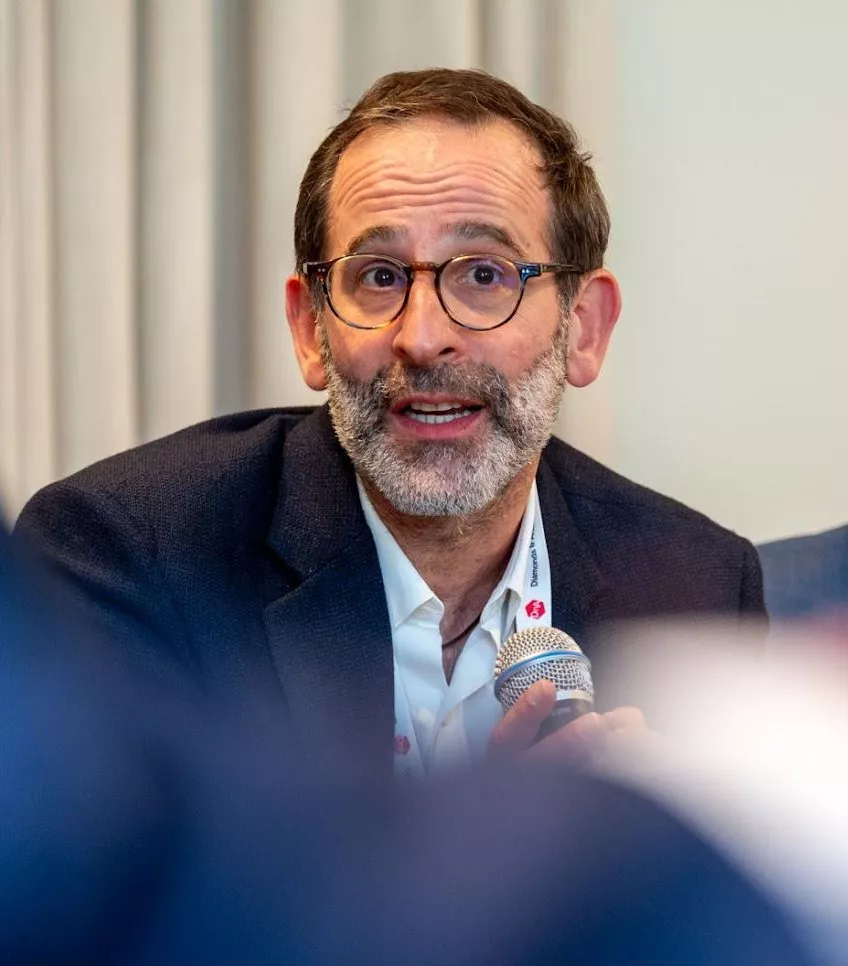
This time we sat down to have a conversation with a fancy-shape specialist and second-generation manufacturer who believes craftsmanship and proximity to the client are what will carry Antwerp forward: Lionel Goldstein from E. Goldstein Diamonds.
Tell us a little about yourself and the company you work for.
Lionel Goldstein: We're manufacturers, and I think one of the few still based here in Belgium. We didn't start out that way, though: I took over my father's business, which originally bought polished stones and resold them polished. That always frustrated me. I felt I wasn't really building anything, and I had no impact on the end result. Over the years I grew closer to a family member who had always been a manufacturer, and we slowly started cutting ourselves: one rough stone, then two, and so on. By around 2010 we were properly manufacturing, and I eventually became a partner, then owner, of the company E. Goldstein Diamonds.
What changed during Covid?
Lionel: I sat at home for three months and told myself: when this is over, I want to really commit to this. We learned something during that period: geographic proximity to clients matters more than we'd assumed before. Before Covid, manufacturing logically drifted to wherever it was cheapest. Covid showed us that cost might matter less than proximity. So we went for it, and that was the start of the workshop as it is now. We initially expected the workshop to grow significantly, but the past few years have been enormously challenging for the industry. Maintaining a strong local manufacturing operation in Antwerp already feels like an achievement.
Was taking over your father's business always the plan?
Lionel: Not at all. My parents were completely against it. I studied political science in Brussels, then started an evening master's in business management, which meant I needed something to do to fill out my days. I started going into my parents’ small office early each morning. I was just sorting diamonds, really. Those first years were about learning the product from the ground up.
How did fancy shapes become your specialty?
Lionel: My father had a small business, but he was very well known in Antwerp for his eye for fancy shapes: real fantasy cuts, as opposed to round. He had an aesthetic sense that I inherited, and that still makes the difference today. People will tell you fancy shapes are subjective, just like everyone likes different fruit. My father and I never believed that. A beautiful stone is a beautiful stone, and a beautiful fancy cut is what we believe a beautiful fancy cut looks like. It might sound arrogant, but you have to believe
in what you're doing. When I started in 2001, 95% of the market was focused on round, because round is the first, and often the only, diamond most people ever buy. That made fancy shapes a niche, and a small one at first. Over time it became an advantage:
I was doing something different from everyone else, at exactly the point when jewelers needed new ideas to grow their business.
What do you predict will be the next big trend in cuts and shapes?
Lionel: It's genuinely hard to say, it's often cyclical. Pears, ovals, marquise all take turns roughly every five years. But we do see a broader shift today toward the creative, and away from standard, classical shapes. It’s partly due to a necessity: demand for cut natural diamonds has dropped sharply, so jewelers have to reinvent themselves, and we do too.
How do you source your rough stones?
Lionel: We try to buy here in Antwerp, as that's central to our business model, through tenders, contracts with miners where possible, and the open market. But sourcing rough is genuinely the biggest challenge this year. The whole business model of the mining companies is changing, on top of the usual pressures.
What do you see as Antwerp's biggest strength as a polishing hub?
Lionel: The quality of the polishers, plain and simple. Ours were born into diamond polishing families, working since they were sixteen or seventeen. That know-how is something Antwerp excels in. Antwerp has become very small in terms of volume, but what remains is a different kind of craft altogether. Here, each cutter takes a stone from rough to a finished piece themselves. It's their own work, start to finish - their baby.
What's the biggest challenge facing the industry right now?
Lionel: Synthetics are taking over several key consumer markets, leaving less space for the natural diamond. This shift has also reshaped the rough market: a very large proportion of rough production is in qualities for which demand has weakened considerably.
What advice would you give someone starting out in the diamond industry today?
Lionel: If you really want to: find something to do differently, or come with serious capital and no illusions. This is an exceptionally challenging period for the industry, and you need to accept that going in, while still believing you can bring something to it, some creative idea.
Is there someone in the Antwerp diamond world whose story you'd love to see told next?
Lionel: I would like to nominate Simon Grunberger. I think reading his story will be fascinating.