In ‘The Faces of the Industry,’ a recurring item in our newsletter, we bring an industry name to the spotlight, one at a time. This person has been nominated by the previous ‘Face of the Industry’ and will appoint the one for the next edition of the Antwerp Diamond Digest.
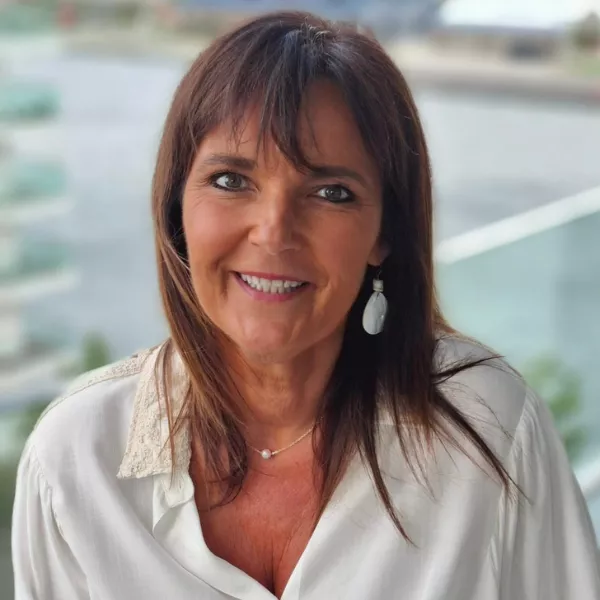
This time, we had the pleasure of interviewing Florence Nobels, a woman in diamonds since a little over ten years, but with lots of stories to tell. From being a diamond trader, to valuing the precious stones in lawsuits, Florence has seen it all in her relatively short career in the industry.
Can you tell us a little bit about what you do in your professional life?
Florence Nobels: For the past few years, I’ve been working mainly as a court expert in diamonds, gemstones, and jewelry. To do that, I went back to school. I took a course in gemstones, and since I already knew diamonds, that helped. I also followed a university-level legal program that all new court experts in Belgium are required to take, which ends with an exam. Since May 2024, I’ve officially been included in the National Register of Belgian Experts. It’s thanks to Eddy Vleeschdrager, an exceptional man and a fellow Belgian expert, actually, that I entered this trajectory.
How did you enter the diamond industry?
Florence: I came into the industry relatively late. Before that, I studied for an MBA and worked in finance and digital marketing for years. At some point, while working at an agency, I decided I wanted to start my own business.
Diamonds weren’t completely out of character for me: my father, Claude Nobels, had a career in diamonds, first at the diamond company De Beers and later as an independent. But at home it wasn’t expected of me, nor encouraged. Neither my sister nor I were pushed into it. Still, I always found it interesting and followed it from the sidelines.
And now, what does a typical workday look like for you?
Florence: It’s very varied, which is what I love about it. Some weeks we’re at the police headquarters in Brussels evaluating and appraising two rooms full of minerals. Other weeks we’re at a diamond company assessing stock or valuing diamonds.
We also work with judges and lawyers who ask for our expertise in their cases, as well as with auditors. Sometimes we even do taxations in court settings. One time in Bruges we were given a small table to work at, we went through lots of stones, and ended up taking home sapphires worth two million dollars for further analysis.
We do also handle private clients. Some simply want to know the value of a piece they intend to pass on to their children, while others have bought something online and discover it’s synthetic. It’s honestly a mix of everything.
You’re also active in Women in Diamonds. Why is that important to you?
Florence: When Women in Diamonds started a few years ago, I wasn’t yet on the board but I felt like it was an important mission. I believe key stakeholders in the industry are still mostly men, especially compared to other industries we still have some catching up to do. With Karen Rentmeesters’ appointment as CEO of AWDC, we’ve seen a positive impact, and I hope more women will get the chance to have a seat at the table.
That’s why I got involved. Now, as a board member, together with 3 of the founding members, we organize events to give women deeper insight into the industry and to empower them through Diamond Dialogues, behind-the-scenes sessions, and networking opportunities.
What are the main challenges and opportunities you see for Antwerp?
Florence: Antwerp is well-placed geographically and safe for international clients. The 0% import tariff to the US is also a major win, for which I like to congratulate AWDC. On the other hand, I think one of the challenges is that we don't collaborate enough sometimes as industry organizations. We should present a united front to the world.
I’m on the board of the Vrije Diamantbeurs, a smaller dynamic exchange, and we try to contribute positively by, amongst others, hosting delegations, collaborating with the Shanghai Diamond Exchange, and supporting industry dialogue. But overall, more collaboration would make Antwerp stronger.
And how do you see the future of Antwerp as a diamond hub?
Florence: I’m optimistic in the long run. Of course, there are short-term challenges: people leaving for other centers, economic pressures, etc. Antwerp has a history of resilience. If you look back, even after the exodus in 1585, the diamond trade eventually returned. With over 500 years of expertise and the right focus on traceability and innovation, I believe Antwerp will remain attractive.
What advice would you give to someone new to the industry?
Florence: First, inform yourself. There are so many resources available, and knowledge is crucial to being respected in the industry. Second, build contacts. That’s harder, but there are people willing to share and guide you. You just have to find the right ones.
People often say the diamond industry is closed, mysterious. But in reality, if you knock on doors, they open. It’s a learning journey, and persistence pays off.
What role do you see for AWDC?
Florence: AWDC does a fantastic job with governments of producing countries and the Belgian authorities, that’s not easy. Where I think more could be done is at the other end of the pipeline: outreach to jewelers and consumers. That’s where we could increase visibility and impact.
Outside of the diamond district, what’s your favorite place in Antwerp?
Florence: The historic city center. With cafés, restaurants, and hidden gems, it’s where I like to take friends from abroad.
Finally, who would you nominate for the next interview?
Florence: I’d nominate Thomas Hainschwang from GGTL. He’s probably the person with the greatest scientific knowledge of diamonds, especially when it comes to synthetics and treatments. I think he’d have a very interesting story.