For Belgium's Day of Crafts (Dag van de Ambachten) on November 15, we're highlighting one of Antwerp's oldest crafts: diamond polishing.
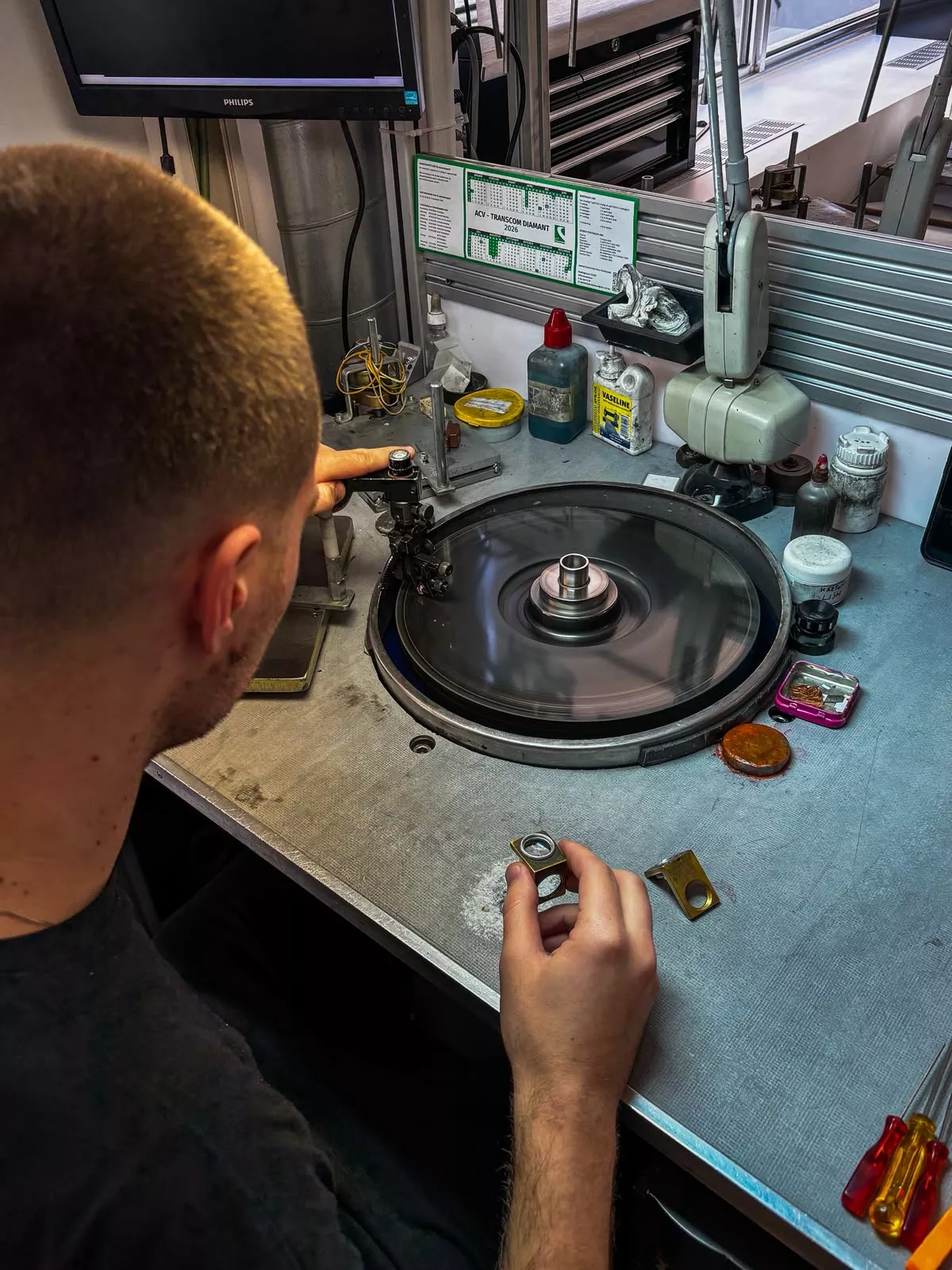
At 25, Ben has already been polishing diamonds professionally for seven years. A graduate of De Stemstroom, Europe’s only diamond-polishing school, he now works at Antwerp Cut, a manufacturer in the heart of the diamond district. We talked about learning the trade, what a polisher's eye adds to modern technology, and why some of the world's most exceptional stones still come to Antwerp.
How did you end up in diamond polishing?
My father is a diamond polisher, so I basically grew up with it. Antwerp has the last remaining polishing school in Europe, and I started there in my third year of secondary school.
What stayed with you from your training at De Stemstroom?
School is where you really learn the basics. We didn't start on real diamonds. First we practiced on other material, and once we had more experience, we moved on to industrial diamonds. The training focused mainly on round diamonds. In the last years we did a little fancy-shape work, but that part you really learn on the job.
What helped me most was the internship. From my fifth year in secondary school onwards, I worked at a polishing factory in Antwerp two days a week. That's when I really started learning the craft. Of my class, which graduated with eight students, three of us became diamond polishers. Others went into different jobs in the sector, because the training gives you a solid knowledge of diamonds that takes you further.
What does a typical workday look like?
We start around 8 am and finish at 4.30 pm. The concept is always the same, but every stone is different. Besides round diamonds, I polish fancy shapes, which I find more fun. The variety in diamonds is what keeps it interesting. When I started here, I got the opportunity to start working on colored stones almost right away.
Part of diamond polishing has become very high-tech. What can a human still do that a machine can't?
Mainly the fineness of the finish, and adjusting when necessary during the process. Things don't always go according to plan. Then you have to look at the stone again, lay the plan over it, and adapt. A machine does what you set it to do. We look at the stone, we see it, and we adjust.
Is there a stone you're especially proud of?
The first emerald cut I ever did. It wasn't a fun stone to work on, because I find that shape really difficult. But in the end, I was very proud of how it turned out, especially since it was my first one.
What sets Antwerp apart? Which stones still come here to be polished?
The special ones: large diamonds and especially colored diamonds. They keep coming here because of the quality we can deliver and the knowledge. We've been doing this for a few hundred years. It's a legacy that has grown within the city.
What would you tell a young person who's thinking about this craft?
You have to be very patient and able to stay focused for a long time. It's definitely not a job for everyone, but you can always learn it. Take every opportunity you get. My father always told me: if you can learn something, do it. I've taken every chance this sector offered me, and that's how I have moved forward.